
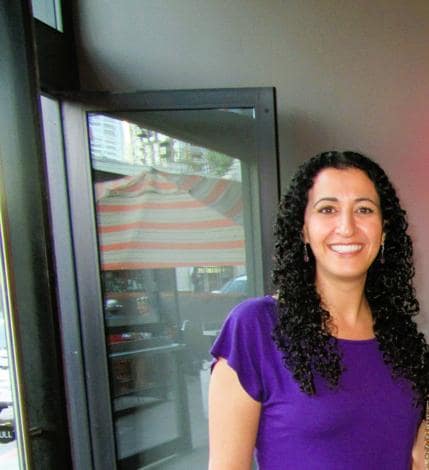
Suha Atiyeh’s career demonstrates how engineering grounded in proven environmental science can redefine the future of city building. With Professional Engineer licensure in Washington DC and Virginia, and Chartered Engineer status in the UK, she brings a highly technical, globally calibrated lens to urban infrastructure development. Her work blends scientific rigor with a deep respect for community impact — ensuring cities become safer, healthier, and more resilient over time.
Her academic foundation at Clemson University, with concentration in hydrology and environmental systems, sharpened her understanding of how urban water systems are directly tied to environmental and public health outcomes. That foundation matured through years spent in globally ranked consulting firms, where she developed the ability to translate environmental goals into deliverable engineering specifications for complex built environments.
In Washington DC, she engineered stormwater systems on Wheeler Road to mitigate frequent flooding while improving daily transportation flow. On MLK Jr. Avenue, she integrated rain gardens that reduced runoff and improved local microclimate conditions — showing how green features can directly serve both mobility performance and public quality of life. At St. Elizabeths Campus and Kenilworth Courts, she introduced bioswales and permeable pavements as active systems that restore ecological balance, rather than passive decorative elements.
Her international contributions — notably in the UAE — show the global adaptability of evidence-based sustainability. On Masdar City, she supported a zero-carbon ecosystem built on renewable energy and optimized water use. Her contributions to regional water quality assessments and stormwater flood mitigation strategy addressed the challenges of arid climates with customized approaches instead of duplicated western templates.
With certifications in LEED AP, Envision Sustainability Professional, and Estidama Pearl Qualified Professional, Atiyeh applies internationally validated frameworks that hold sustainability accountable to measurable metrics — not aspirational messaging.
As the ICE Representative in the US Mid-Atlantic South Region, she advocates for elevating evidence-based sustainability as the universal baseline in engineering practice — a standard every engineer must adopt to meet the realities of climate and growth ahead.